For many UK SMEs, Microsoft 365 has become the invisible backbone of daily operations. It is the environment where emails are sent, documents are drafted, and sensitive client data is stored. However, because it is so deeply integrated into our workflows, it is also an area where "licence sprawl" and inefficient configurations often go unnoticed. For a growing business, these seemingly minor monthly costs can aggregate into a significant, unnecessary drain on annual budgets. Reducing IT costs within Microsoft 365 isn't about cutting corners or sacrificing security; it is about aligning your subscription model with your actual business requirements and utilising the powerful tools you are already paying for to replace expensive third-party alternatives. This approach ensures you are getting true value from your investment, rather than simply accepting the status quo.
What "reducing IT costs using Microsoft 365" actually means
At its core, reducing IT costs with Microsoft 365 means optimising your existing investment. It is not about abandoning essential tools or compromising on capability. Rather, it involves a strategic review of how your organisation uses the platform, identifying areas of inefficiency, and making targeted adjustments. This includes ensuring every user has the correct licence for their role, eliminating redundant third-party software by using Microsoft 365's built-in features, and automating routine tasks to free up staff time. It also encompasses proactive data governance to manage storage and compliance, alongside a full exploitation of the security tools already present in your subscription. In essence, it is about smart management and getting the maximum utility from a platform many SMEs already consider indispensable.
Why it matters for UK SMEs
For UK SMEs, the imperative to manage IT costs effectively goes beyond simple budgeting. Unnecessary expenditure on IT directly impacts your bottom line, diverting funds that could be invested in growth, staff development, or market expansion. Beyond the financial aspect, inefficient IT management within Microsoft 365 can introduce significant operational and compliance risks.
Consider the UK GDPR and the Information Commissioner's Office (ICO). Paying for excessive cloud storage, particularly for redundant or obsolete data, not only inflates costs but also increases your organisation's data footprint. This, in turn, amplifies the risk and potential liability in the event of a data breach. The ICO takes a dim view of organisations that retain personal data for longer than necessary.
Furthermore, failing to properly configure and utilise the security features within Microsoft 365 can leave your business vulnerable. For many UK SMEs, achieving Cyber Essentials certification is a commercial necessity, particularly when bidding for government contracts or working with larger enterprises. Microsoft 365 Business Premium, correctly configured, provides many of the controls required for this certification. Ignoring these capabilities means either purchasing expensive, duplicating third-party security solutions or, worse, operating with an inadequate security posture, which can lead to reputational damage and financial penalties from regulatory bodies like the NCSC.
Efficient IT management within Microsoft 365 therefore translates into better financial health, reduced regulatory risk, enhanced security, and improved operational efficiency. It is about building a stable, compliant, and cost-effective foundation for your business operations.
How to reduce IT costs using Microsoft 365, a practical walkthrough
Optimising your Microsoft 365 environment requires a structured approach. It is not a one-off task but an ongoing commitment to efficiency and smart resource allocation.
Conduct a Rigorous Licence Audit
The most common source of wasted IT expenditure is the "set it and forget it" approach to Microsoft 365 licensing. When a new employee joins, they are often assigned a premium licence—perhaps a Business Premium or E5—simply because it is the "standard" choice. Months later, if that role changes or if the employee leaves, that licence often sits dormant or remains over-provisioned for the user's actual needs. This oversight is a direct drain on resources.
To truly optimise your licence spend, you need a systematic process. Start by utilising the Microsoft 365 admin centre to view usage reports. These reports provide granular detail on who is using what, and crucially, who isn’t. If a user hasn’t logged into any Microsoft 365 service for 30 days, or perhaps 60 days depending on your internal policies, investigate whether they still require a licence. It is surprising how often licences are retained for contractors whose projects have finished, or for employees who have moved on.
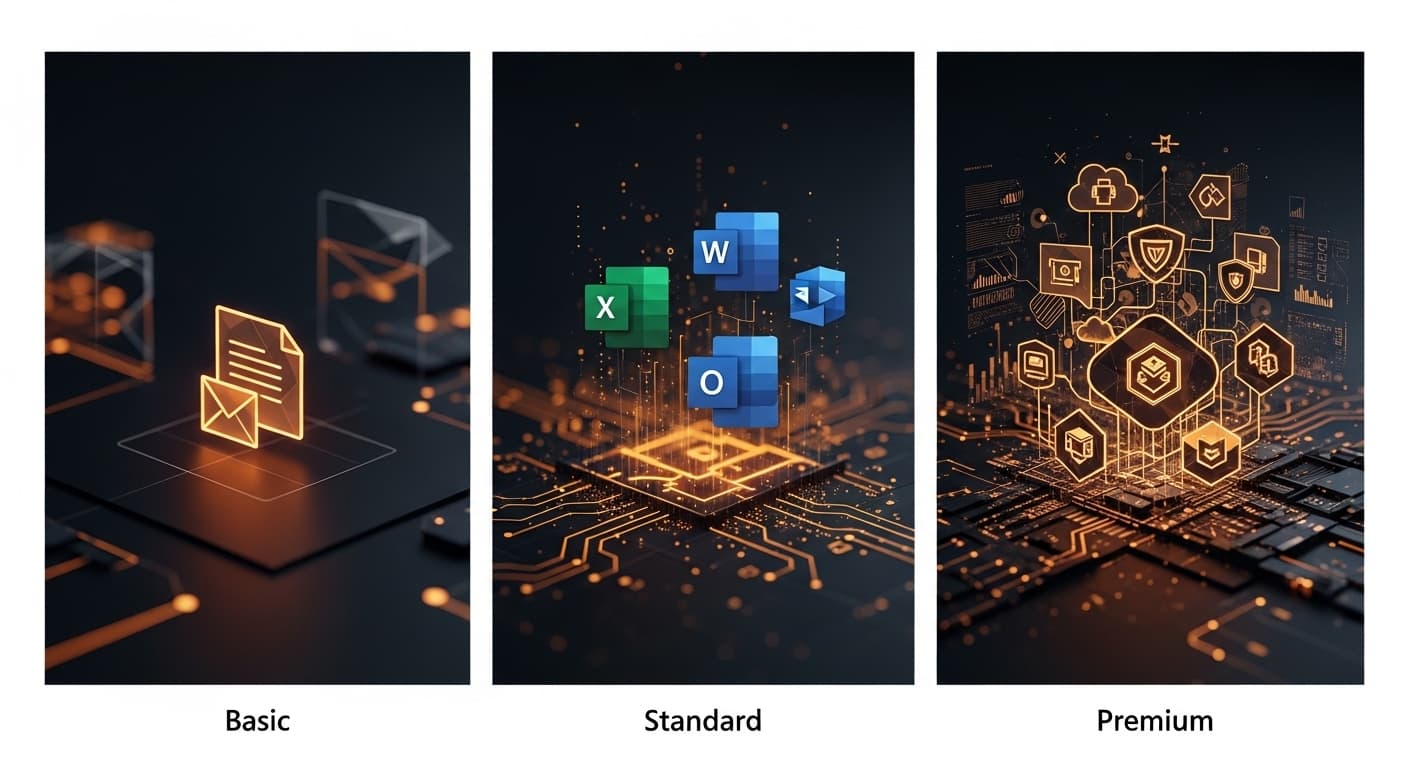
Beyond identifying inactive users, match licences to specific roles. Not every employee needs the full suite of advanced security and compliance tools. For instance, front-line staff or warehouse operations personnel may only need the base Business Basic plan, which provides email and web-based apps like Outlook, Word, Excel, and Teams. Conversely, your senior leadership, finance team, or those handling sensitive client data may genuinely require the advanced features found in Business Premium, which includes enhanced security and device management. A careful mapping of roles to licence types can yield substantial savings without compromising functionality.
Finally, address the "Unassigned" trap. Licences removed from departed employees must be unassigned immediately. Many businesses continue to pay for these licences for months after a staff member has left because the offboarding process wasn't fully completed. This is a simple administrative oversight with a direct financial cost. From our service desk data, the most common cause of unnecessary licence expenditure in UK SMEs is this precise issue: licences remaining active for staff who have left the organisation or changed roles. On a recent client tenant audit for a 60-user manufacturing firm in Manchester, we found 15 inactive licences that had been paid for for over six months, amounting to an avoidable annual cost of nearly £3,000. It is a recurring pattern that is easily remedied with a disciplined approach.
Consolidate Your Tech Stack
One of the most effective ways to lower your total cost of ownership (TCO) is to stop paying for third-party software that Microsoft 365 already provides. Many UK SMEs pay for standalone cloud storage, signature management tools, or basic project management software, forgetting that these capabilities are included in their subscription.
- Cloud Storage: If you are paying for Dropbox, Box, or Google Drive for business, you are likely duplicating costs. Migrating to SharePoint and OneDrive provides a secure, GDPR-compliant repository that is already integrated into your existing security policies and user accounts. This consolidation simplifies access, enhances collaboration, and removes the need to manage multiple cloud storage vendors.
- Communication and Collaboration Tools: If you are paying for Zoom, Slack, or similar video conferencing and team messaging platforms, evaluate whether Microsoft Teams can fulfil those requirements. Teams has evolved into a robust hub for video conferencing, VoIP telephony integration, file sharing, and project collaboration. Its deep integration with other Microsoft 365 applications often eliminates the need for fragmented subscriptions and the associated administrative burden.
- Security Add-ons: Business Premium includes Microsoft Defender for Business. If you are paying for a separate third-party antivirus for every machine, you are paying for protection that is already built into your Microsoft 365 stack. Defender for Business offers next-generation protection, endpoint detection and response (EDR), and vulnerability management, providing comprehensive security without additional software expenditure.
- Project and Task Management: Many SMEs use tools like Trello or Asana for basic project tracking. Microsoft Planner and To Do, both included with most Microsoft 365 business plans, offer capable alternatives for managing tasks, assigning responsibilities, and tracking progress within teams, integrating directly with Teams and SharePoint.
- Forms and Surveys: Instead of paying for SurveyMonkey or similar services, Microsoft Forms provides a straightforward tool for creating surveys, quizzes, and registration forms, with data easily exportable to Excel or integrated into Power Automate workflows.
Consolidating these services not only reduces direct subscription costs but also simplifies IT management, reduces training overhead, and improves data consistency across your organisation.
Leverage "Cyber Essentials" and Built-in Security
In the UK, achieving Cyber Essentials certification is a vital milestone for SMEs, particularly those bidding for government contracts or working with large enterprises. A common misconception is that you need to purchase expensive, external security appliances or software to meet these standards. In reality, Microsoft 365 Business Premium contains the essential security controls required to satisfy the Cyber Essentials framework, and often exceeds them.
By configuring Conditional Access policies, Multi-Factor Authentication (MFA), and Microsoft Intune (all included in the suite), you can secure your environment without purchasing additional security layers. Conditional Access allows you to define granular rules for accessing resources, such as requiring MFA for remote access or blocking access from unmanaged devices. MFA is a non-negotiable defence against credential theft, a primary vector for cyber-attacks. Microsoft Intune provides mobile device management (MDM) and mobile application management (MAM) capabilities, allowing you to secure company data on both corporate and personal devices, ensuring compliance and data protection.
Furthermore, Microsoft Defender for Business provides enterprise-grade endpoint security, covering the antivirus and anti-malware requirements of Cyber Essentials. By utilising these integrated tools, you not only reduce your software bill but also lower the administrative burden on your IT team, as they no longer need to manage multiple disparate security dashboards or integrate different vendor solutions. This approach delivers a more cohesive and robust security posture, aligned with NCSC best practices, without the additional expense.
Automate Administrative Tasks with Power Automate
Time is money. When your staff spend hours manually copying data from emails into Excel sheets, chasing approvals via phone calls, or performing repetitive data entry, your business is losing money. Microsoft 365 includes Power Automate, a powerful tool that allows you to create automated workflows between your apps and services. This can significantly reduce manual effort and improve operational efficiency.
Consider these practical examples of cost-saving automation:
- Automated Onboarding and Offboarding: Trigger a workflow that creates a new user profile in Microsoft 365, sets up their email signature, adds them to relevant Teams channels, and sends them a "Welcome" document the moment they are added to your HR system. For offboarding, automate the process of disabling accounts, archiving data, and revoking access.
- Approval Processes: Replace manual email chains for expense claims, holiday requests, or document approvals with automated workflows. These can notify managers, collect approvals, and log the outcome directly into a SharePoint list or a dedicated database, ensuring accountability and reducing delays.
- Data Archiving and Reporting: Automatically move attachments from incoming invoices to a secure folder in SharePoint, reducing the manual labour associated with accounts payable. Set up flows to generate weekly sales reports from your CRM data and email them to the relevant stakeholders, saving hours of manual data compilation.
- Customer Feedback Management: Automatically capture customer feedback from a Microsoft Form, log it in a SharePoint list, and notify the relevant team member for follow-up, ensuring no feedback is missed and improving customer service efficiency.
By investing a small amount of time in setting up these "flows," you free up your team to focus on revenue-generating activities rather than administrative maintenance. It is a powerful way to make your existing workforce more productive without increasing headcount.
Implement Data Governance to Reduce Storage Costs
While cloud storage is relatively inexpensive, it is not infinite. Over time, "data rot"—the accumulation of redundant, obsolete, or trivial (ROT) data—can lead to increased storage requirements and, more importantly, increased risk. Under the UK GDPR, you have a legal obligation to manage personal data responsibly. Keeping vast amounts of unnecessary data increases your storage costs and your liability in the event of a breach.
Implementing robust data governance policies is therefore crucial for both cost efficiency and compliance.
- Retention Policies: Use Microsoft Purview (formerly Microsoft 365 Compliance Centre) to set automatic retention policies. You can configure the system to automatically delete or archive data after a set period (e.g., 7 years for financial records, 1 year for temporary project files), ensuring you aren't paying to store digital clutter. These policies help you adhere to legal and regulatory requirements while optimising storage.
- SharePoint and OneDrive Clean-ups: Regularly audit your SharePoint sites and individual OneDrive accounts. Often, large files from past projects, redundant versions of documents, or personal media are left sitting in active libraries. Moving these to cheaper "cold" archival storage, deleting them entirely if no longer needed, or migrating them to appropriate long-term storage solutions will streamline your environment and reduce active storage footprint.
- Information Architecture: Establish a clear information architecture for your SharePoint sites. A well-organised structure, with defined document libraries and metadata, makes it easier for users to save files correctly and for IT to manage retention and access policies effectively.
- Employee Training and Culture: Encourage a culture of "clean digital hygiene" within your organisation. If employees understand where to save files, how to use versioning, and why data retention matters, you will generate significantly less duplicate or unnecessary data. Regular training can reinforce best practices and empower users to be part of the solution.
By proactively managing your data, you not only reduce direct storage costs but also decrease the scope and impact of potential data breaches, which can be far more expensive than any storage bill.
Common mistakes we see
Even with the best intentions, SMEs often stumble when trying to optimise their Microsoft 365 spend. Here are some common pitfalls we observe:
- Ignoring usage reports: Many organisations simply renew licences without checking actual usage, continuing to pay for inactive users or over-provisioned accounts.
- Duplicating functionality: Paying for third-party cloud storage, communication tools, or security software when equivalent or superior features are already included in their Microsoft 365 subscription.
- Underutilising built-in security: Failing to configure essential features like MFA, Conditional Access, and Defender for Business, leading to unnecessary security risks and potentially requiring additional, external security investments.
- Neglecting data governance: Allowing data to accumulate indefinitely, increasing storage costs and creating compliance headaches under UK GDPR.
- Lack of staff training: Not investing in training staff on the full capabilities of Microsoft 365, meaning valuable features like Power Automate or advanced collaboration tools go unused.
Key Takeaways
Reducing your IT spend with Microsoft 365 is an exercise in discipline and strategic configuration. By following these steps, you can ensure your business is not just spending less, but spending smarter:
- Audit regularly: Review your licence count monthly to ensure you aren't paying for users who no longer exist or don't need premium features.
- Eliminate redundancy: Audit your current tech stack and migrate away from third-party tools that duplicate functions already present in your Microsoft 365 subscription.
- Prioritise built-in security: Use Business Premium features to meet Cyber Essentials standards, removing the need for additional third-party security subscriptions.
- Embrace automation: Utilise Power Automate to eliminate manual, time-consuming administrative tasks, freeing up staff for more valuable work.
- Govern your data: Implement retention policies and regular clean-ups to stay compliant with ICO regulations while reducing your storage footprint.
As a UK SME, your IT strategy should be a driver of growth, not an anchor of unnecessary expense. By optimising your Microsoft 365 environment, you can improve your security posture, increase operational efficiency, and significantly reduce your bottom-line IT costs. Frankly, leaving money on the table when the tools for saving it are already at your disposal seems a bit daft.
To take the next step