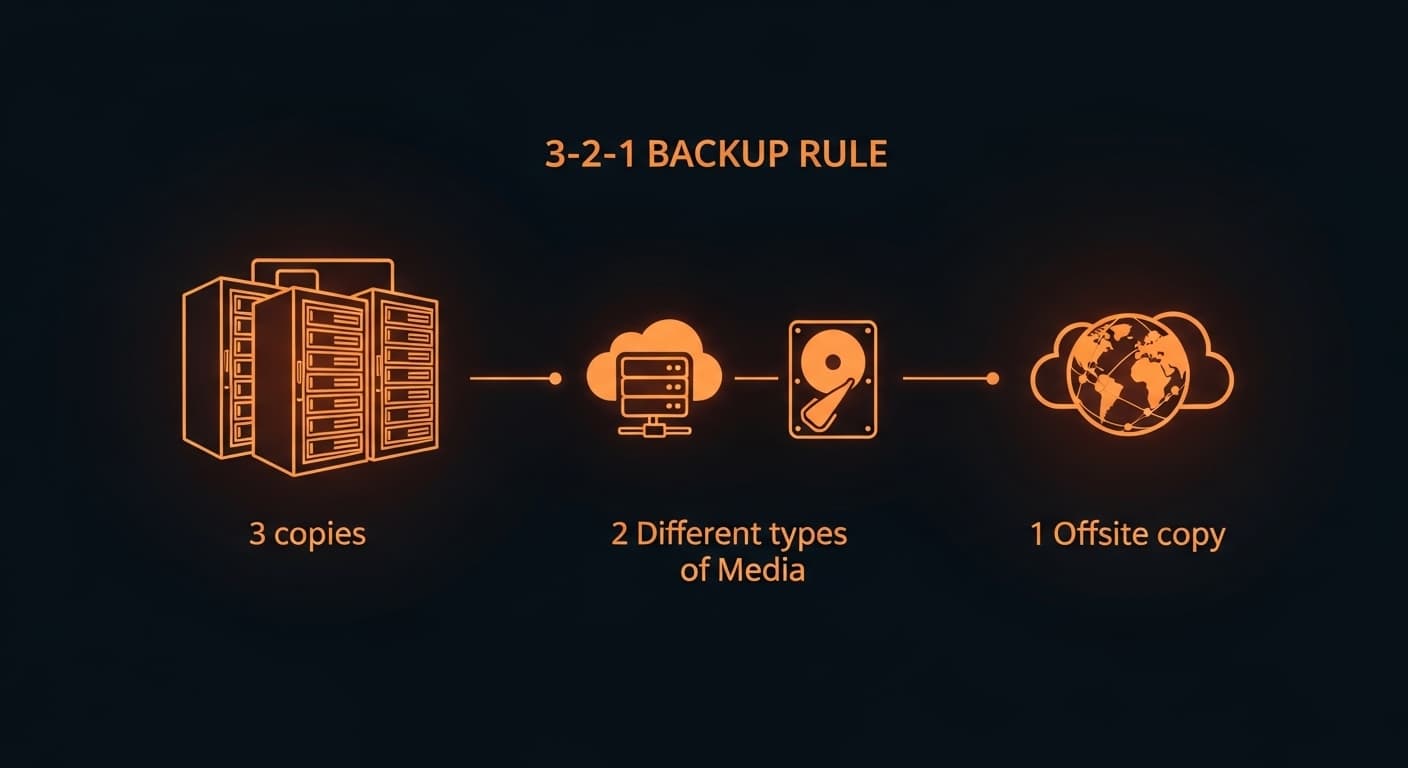

In the current climate, where ransomware groups target UK SMEs with increasing frequency and sophistication, the standard "backup" is no longer enough. Many businesses mistakenly believe that as long as they have a copy of their data stored on an external drive or in a basic cloud folder, they are adequately protected. However, modern ransomware is engineered to seek out and encrypt these connected backups alongside your primary files. If your backup is accessible to your network, it is inherently vulnerable. This is precisely why "Immutable Backups" have transitioned from a technical concept to an essential pillar of any robust cyber resilience strategy. This guide will clarify what immutable backups are, explain why they represent the gold standard for data protection, and detail how UK businesses can implement them to meet regulatory obligations and effectively survive a cyber-attack.
What Immutable Backups Actually Mean
At its core, "immutable" simply means unchangeable. An immutable backup is a copy of your data that is locked in a state where it cannot be modified, encrypted, or deleted for a predefined period. Once the data is written to this storage, it is effectively "set in stone." This means that even if a cybercriminal gains administrative access to your network, their credentials – or even your own – cannot alter or erase that backup until its predetermined retention period expires.
The problem with traditional backups is their inherent mutability. They can be overwritten or deleted. A common tactic for ransomware actors, once they infiltrate an environment, is to locate backup software or storage repositories and wipe them clean. This manoeuvre is designed to remove your primary recovery option, leaving you with little choice but to pay the ransom to retrieve your files. By implementing immutable storage, you remove this leverage entirely. Your data remains safe, untouched, and fully available for restoration, thereby neutralising the attacker’s most potent weapon.
Why it Matters for UK SMEs
For UK SMEs, ensuring data protection extends beyond mere business continuity; it is a fundamental legal and commercial imperative. Failing to adequately protect data can lead to operational paralysis, significant financial penalties, and irreversible damage to reputation.
Direct Commercial Impact and Business Continuity: The immediate cost of a ransomware attack is downtime. If your primary systems are encrypted and your backups are also compromised, your business stops. This means lost revenue, missed deadlines, and inability to serve clients. Immutable backups provide a guaranteed recovery point, significantly reducing potential downtime and enabling a swifter return to normal operations. This direct impact on operational resilience makes it a clear commercial priority.
Reputational Damage and Client Trust: Beyond the financial and operational costs, a data breach resulting in irretrievable data can severely erode client trust. For many SMEs, reputation is their most valuable asset. Demonstrating a proactive approach to data security, including the use of immutable backups, reassures clients and partners that their data is handled responsibly. Conversely, a public failure to recover data can lead to a lasting loss of confidence.
UK GDPR and ICO Expectations: Under the UK General Data Protection Regulation (GDPR), businesses are legally mandated to implement "appropriate technical and organisational measures" to ensure the security of personal data (Article 32). The Information Commissioner’s Office (ICO) has become increasingly clear on what "appropriate" entails, particularly regarding restorability. They do not merely examine whether you have a backup; they scrutinise whether that backup is resilient against modern threats. Should you suffer a data breach and the ICO finds your backups were easily deleted by ransomware, you could be deemed to have failed in your duty to protect personal data. The consequences can include substantial fines and significant reputational damage. Immutable backups directly address the restorability requirement, providing a robust defence against such findings.
Cyber Essentials Compliance and NCSC Guidance: The UK government’s Cyber Essentials scheme outlines five key technical controls. While backup is not explicitly listed as one of the five, it underpins several areas, notably "Secure Configuration" and "Malware Protection." Furthermore, the National Cyber Security Centre (NCSC) consistently advises UK organisations on the importance of resilient backup strategies, often highlighting the need for offline or immutable copies. Implementing immutable backups demonstrates a proactive, expert-level approach to cyber security that aligns with NCSC best practices and is increasingly demanded by auditors and cyber insurance providers. It signals a serious commitment to defence, which can even influence insurance premiums.
How to Implement an Immutable Backup Strategy
Implementing immutability is not merely about acquiring new hardware; it demands a strategic architectural shift. To construct a truly robust strategy, UK SMEs should adhere to these practical steps:
1. Understand the Underlying Technologies
Immutability is typically achieved through WORM (Write Once, Read Many) technology or Object Lock policies.
- WORM Storage: Historically, WORM involved physical media. Today, "logical" WORM is enforced by software within the storage system. When backup software sends data, the storage device applies a lock, preventing any delete or modify commands until the retention period expires.
- Object Lock Policies: In cloud environments, such as S3-compatible storage, Object Lock policies manage immutability. You set a retention period (e.g., 30, 60, or 90 days) on a bucket. During this window, the cloud provider's API will reject any attempt to delete that data, even if the request comes from an account with root-level access. This creates a hardened perimeter, logically separated from your production environment.
2. Categorise Your Data
Not all data requires the same level of protection or the same retention period. Identify your "crown jewels"—the data that, if lost, would cause severe operational disruption or business failure—and prioritise these for immutable storage. This might include client databases, financial records, intellectual property, or critical operational files. Less critical data might have shorter immutable retention or different backup tiers.
3. Define and Implement Retention Windows
How long do you truly need to keep data immutably locked? For regulated businesses (e.g., in finance, legal, or healthcare), statutory retention periods may dictate this. For general SMEs, a 30-day immutable window is often sufficient to identify a ransomware event, contain it, and recover from a clean point before the infection is inadvertently "backed up." Longer periods, such as 60 or 90 days, offer an increased buffer against sophisticated, slow-moving threats. It is crucial these policies are set correctly at the storage level, not just within your backup application.
4. Ensure Air-Gapping or Logical Separation
Immutability is most effective when combined with an "air gap"—a physical or logical separation between your production network and your backup repository. This ensures that even if your entire Active Directory or primary network is compromised, the backup environment remains invisible and inaccessible to the attacker. For cloud-based immutable storage, this separation is inherent. For on-premises solutions, it means ensuring the backup target is not directly mounted or easily accessible from the primary network.
5. Test Your Restores Regularly
An immutable backup is only useful if it works reliably when needed. You must regularly simulate a full restore process. This isn't just about verifying data integrity; it's about validating the entire recovery plan. How long does it take to restore a critical server? Can you restore individual files efficiently? From our service desk data, the most common cause of extended downtime post-attack in UK SMEs is not the lack of a backup, but the failure of a restoration process that was never tested. We recently onboarded a 40-user London accountancy firm last quarter and the first thing we addressed was their untested, single-point backup system; we migrated them to a multi-layered immutable solution and conducted a full recovery drill within the first month. Knowing exactly how long it will take to get your systems back online is invaluable.
6. Monitor and Manage Storage Growth
Because immutable data cannot be deleted until its retention period expires, your storage usage will naturally grow. Without proper management, this can lead to escalating costs or, worse, running out of space, which could halt new backups. You need a managed solution that automatically manages these retention policies, ensuring old backups are purged by the system once their "lock" expires, preventing your storage costs from spiralling out of control.
Common Mistakes We See
Even with the best intentions, UK SMEs often make specific errors when implementing or relying on backup solutions.
- Assuming Backup Equals Immutable: Many businesses believe having any backup is enough, failing to understand the critical distinction between a standard backup and one that is truly immutable against deletion or encryption.
- Lack of Air-Gapping or Isolation: Storing backups on a network share or a connected external drive that is accessible from the production environment renders them vulnerable to the same ransomware that attacks your live data.
- Untested Recovery Plans: Having backups is one thing; being able to successfully restore from them in a timely manner is another. Many organisations discover their recovery process is flawed only when a disaster strikes.
- Incorrect Retention Policies: Setting retention periods too short means you might lose critical data before an attack is even detected, while setting them too long can lead to unnecessary storage costs.
- Over-reliance on a Single Solution: Placing all recovery eggs in one basket, even an immutable one, introduces a single point of failure. A layered approach with multiple, geographically separated copies is always preferable.
Key Takeaways
- Immutable means unchangeable: This is the only way to ensure your backups cannot be encrypted or deleted by sophisticated ransomware attacks.
- Ransomware-proof your data: By removing an attacker's ability to delete backups, you directly neutralise their primary extortion tactic, safeguarding your business continuity.
- Regulatory peace of mind: Implementing immutability aligns directly with UK GDPR requirements and meets the high standards expected by the ICO for data restorability.
- Strategic implementation is crucial: It requires careful consideration of data categorisation, retention policies, air-gapping, and continuous monitoring.
- Test, test, test: Technology is only as effective as the process behind it. Regular, simulated restoration testing is the final, non-negotiable piece of the puzzle.
When to Call in Help
Configuring and managing immutable backup solutions, particularly across diverse data types and regulatory requirements, demands specific technical expertise. Incorrectly set retention policies can lead to spiralling storage costs, or, far worse, critical gaps in your protection. For most UK SMEs, the internal resources and knowledge required to design, implement, and maintain such a critical system are simply not available. Cyber security is not a "set and forget" task; it is a constant evolution. As threats become more aggressive, the tools and strategies we use to defend our businesses must become more rigid and sophisticated. Immutable backups provide that necessary rigidity, ensuring that while your systems might face an attack, your business’s future remains intact.
To take the next step