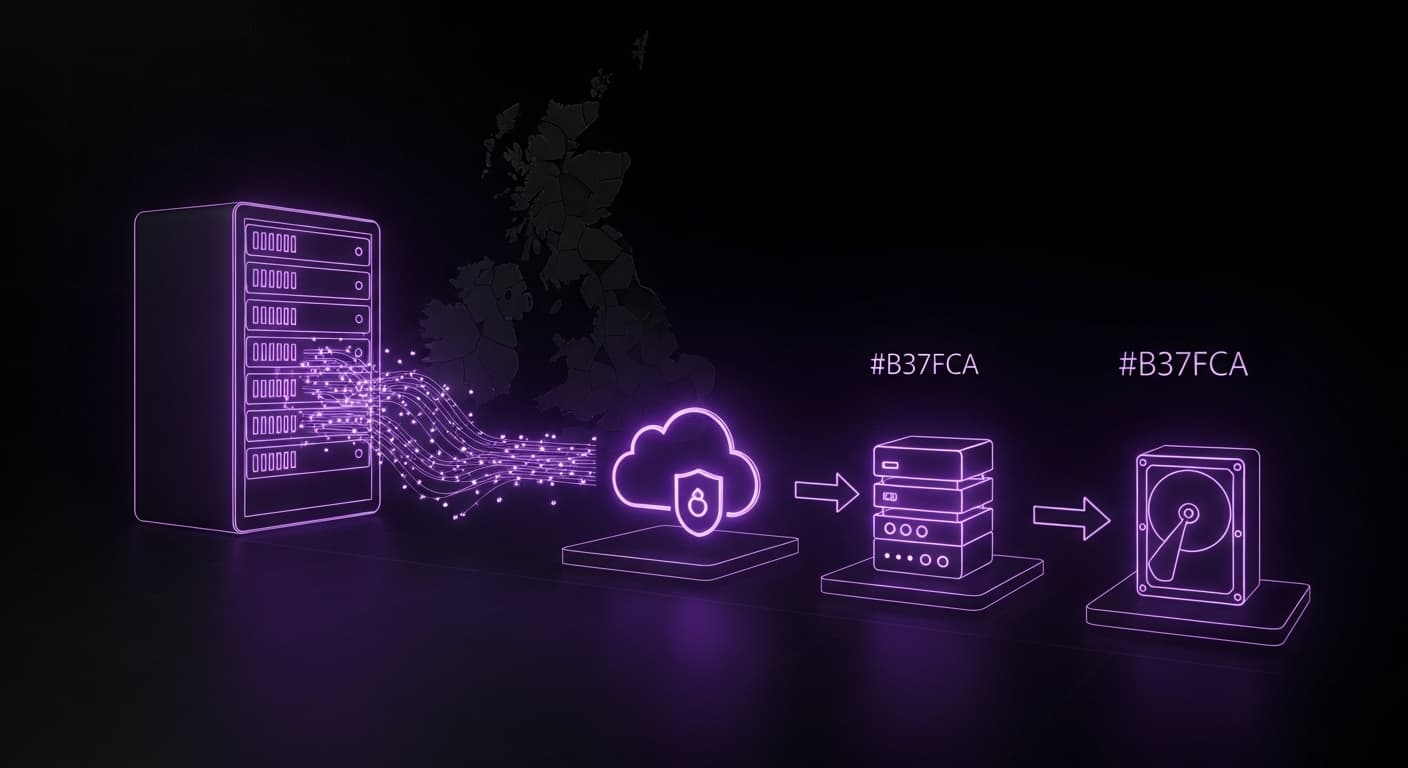

A single unexpected event can be the difference between a thriving UK small or medium-sized enterprise (SME) and one facing severe disruption. Consider your primary server failing on a busy Monday morning, a sophisticated ransomware attack encrypting every critical file, or even a simple burst pipe flooding your office. The immediate concern isn't "what happened?" but "how quickly can we resume operations?" For too many businesses, the honest answer is often a worrying "we don't know." This is precisely why a well-conceived backup strategy is not merely an IT overhead; it is the cornerstone of your entire Business Continuity Plan. It involves more than just having a copy of your data; it demands a tested, reliable, and rapid method to restore operations, protect your reputation, and meet your legal obligations. This guide will move beyond basic assumptions, providing the essential strategies and practical steps to build data resilience that genuinely protects your business.
What Business Continuity Planning actually means
Many business owners believe that as long as some form of backup is running, they have addressed the risk. This is a dangerous misconception. A true business continuity strategy thinks beyond the data itself and focuses on the operational impact of its absence.
At its core, Business Continuity Planning (BCP) is the overarching strategy that ensures your entire business can continue to function during and after a disruptive event. This encompasses a multitude of considerations: maintaining essential communications, identifying alternative workplaces, managing supply chain disruptions, and, critically, ensuring the resilience of your IT systems and data. It's about keeping the lights on, so to speak, even when the power grid is down.
Your backup strategy provides the raw material, the copies of your data. Disaster Recovery (DR), by contrast, is the technical plan for using those backups to restore your IT systems and infrastructure after a disruptive event. BCP encompasses DR, but extends to every facet of your organisation's ability to operate. It is the framework that allows your business to survive and recover from anything from a localised power cut to a major cyber incident. If the foundation of your data resilience is weak, the entire continuity plan will collapse when tested.
Why it matters for UK SMEs
For UK businesses, your backup strategy is not just an operational issue, it is a commercial, legal, and compliance imperative. Ignoring this area introduces unacceptable risk and can have significant repercussions beyond mere inconvenience.
Understanding Your RTO and RPO
Before you can choose a backup solution, you must define what "recovery" actually means for your business. This is determined by two critical, non-negotiable metrics:
- Recovery Time Objective (RTO): This is the maximum acceptable amount of time your business can be offline following a disaster. It answers the question: "How quickly do we need to be back up and running?" For an e-commerce business, an RTO might be less than an hour, as every minute of downtime directly translates to lost sales. A consultancy firm that can work offline for a period might tolerate an RTO of 24 hours. Exceeding your RTO can result in lost revenue, damaged customer relationships, contractual penalties, and a significant blow to your reputation.
- Recovery Point Objective (RPO): This is the maximum amount of data you can afford to lose, measured in time. It answers the question: "How much work are we prepared to re-do?" If your RPO is one hour, you need to be backing up your data at least every hour to ensure no more than an hour's worth of work is lost. If it is 24 hours, a nightly backup might suffice. Losing more data than your RPO dictates means critical transactions, customer interactions, or project work are simply gone, often with no way to recreate them.
Defining your RTO and RPO is the first step in moving from a passive backup routine to an active business continuity plan. These metrics dictate the type of technology you need, the frequency of your backups, and the specific procedures you must have in place to recover effectively. Without them, any backup strategy is simply a guess, and your recovery efforts will likely fall short of your business needs.
GDPR and Data Protection
The General Data Protection Regulation (GDPR) places strict obligations on how you handle personal data. A robust backup plan is essential for demonstrating compliance and mitigating the severe penalties for non-compliance.
- Data Availability and Integrity: Under GDPR, you have a duty to protect personal data from accidental loss, destruction, or damage. This includes ensuring its ongoing confidentiality, integrity, and availability. A failure to restore data promptly after an incident could be considered a data breach, potentially leading to significant fines from the Information Commissioner's Office (ICO). Furthermore, if data integrity is compromised, and you cannot restore a verified clean copy, you face serious compliance issues.
- The Right to Erasure (Right to Be Forgotten): If an individual requests that you delete their personal data, you must be able to do so from your live systems. You must also have a clear, documented policy for how that data is eventually and permanently removed from your backup archives within a reasonable timeframe. This requires careful planning to ensure data is not inadvertently retained indefinitely in backups after an erasure request, which could lead to non-compliance.
- Data Breach Reporting: If you suffer a ransomware attack or any incident that compromises personal data, you are likely required to report it to the ICO within 72 hours. The ICO will want to know what technical and organisational measures you had in place to protect and restore the data. Having a tested, modern backup strategy demonstrates due diligence and can significantly mitigate potential penalties, as it shows you have taken reasonable steps to prevent and recover from such incidents. The National Cyber Security Centre (NCSC) regularly advises that strong, tested backups are crucial for ransomware recovery.
Cyber Essentials
Cyber Essentials is a UK government-backed scheme designed to help businesses protect themselves against common cyber threats. While the base certification focuses on five key technical controls (firewalls, secure configuration, user access control, malware protection, and patch management), a comprehensive backup and recovery plan is a fundamental part of the resilience the scheme promotes. The NCSC explicitly states that backups are a critical defence against ransomware.
In the event of a malware or ransomware attack, a successful and timely recovery is the ultimate proof that your broader security posture is effective. An inability to recover quickly, or at all, undermines the entire purpose of your cyber security investments and can severely damage your reputation. This can make it harder to win contracts, particularly those that require Cyber Essentials or Cyber Essentials Plus certification, as potential clients will question your ability to maintain service and protect their data. Demonstrating a robust backup and recovery strategy is key to showing you are a responsible and secure partner.
How to build and test your backup plan
Moving from theory to a functional, reliable backup strategy requires a systematic approach. This is where the practical steps truly matter, ensuring your business can withstand disruptive events.
The 3-2-1-1-0 Rule: A Modern Blueprint for Data Resilience
The 3-2-1 rule has been a data protection mantra for years, but in the face of modern threats like ransomware, it has been updated to provide even greater security. For any UK SME, the 3-2-1-1-0 rule is the gold standard for comprehensive data resilience.
The Core 3-2-1 Principle
- 3 Copies of Your Data: This includes the original, "live" data and at least two separate backups. This redundancy is crucial. If your live data is corrupted or lost, you have two other sources to restore from, significantly reducing the risk of total data loss.
- 2 Different Types of Media: Do not put all your eggs in one basket, particularly when it comes to storage media. Storing one backup on the same server or storage array as your live data is a recipe for disaster if that hardware fails. A common and highly effective approach is to store one backup on a local device (such as a Network Attached Storage, or NAS, or a dedicated backup appliance) and another in a different format, typically in the cloud. This diversity protects against media-specific failures.
- 1 Copy Off-Site: This is your ultimate protection against a location-specific disaster like a fire, flood, theft, or even a widespread power outage affecting your entire premises. If your entire office is compromised, an off-site backup ensures your data is safe and recoverable from a completely different physical location. For most SMEs, the cloud is the most practical, cost-effective, and scalable way to achieve this, as it eliminates the need for manual transport of physical media.
The Modern Additions: 1-1-0 for Cyber Resilience
- 1 Copy Offline or Immutable: Ransomware is specifically designed to seek out and encrypt not just your live files, but also any connected backups it can reach. An immutable backup is one that, once written, cannot be altered, encrypted, or deleted for a set period, regardless of administrative privileges. This creates a "digital air gap" that ransomware cannot cross, guaranteeing you have a clean, uninfected copy to restore from. An offline copy (such as a rotated hard drive stored securely off-site) serves a similar purpose but is more manual, less frequently updated, and generally less practical for frequently changing data volumes common in modern SMEs.
- 0 Errors After Verification: A backup you have not tested is not a backup; it is a gamble. The "zero" signifies the goal of having zero errors during your recovery tests. This means regularly and systematically testing that you can actually restore your data from your backups, and that the restored data is complete and functional. This step is non-negotiable.
Choosing the Right Backup Solutions for Your SME
With your RTO, RPO, and the 3-2-1-1-0 rule firmly in mind, you can now evaluate the specific technologies that will form your strategy.
Types of Backups
- Full Backup: This takes a complete copy of all your selected data every time it runs. It is the simplest type to manage and generally the fastest to restore because all the data is in one place. However, full backups are slow to perform, especially for large datasets, and use the most storage space.
- Incremental Backup: An incremental backup only copies the data that has changed since the last backup of any kind (full or incremental). This is very fast to perform and highly storage-efficient. The downside is that a full restoration requires the last full backup and every subsequent incremental backup in the chain, making the recovery process more complex and potentially slower.
- Differential Backup: A differential backup copies all data that has changed since the last full backup. These backups take longer to perform and use more space than incrementals, but restoration is faster and simpler as you only need the last full backup and the latest differential backup.
A common strategy for SMEs is to perform a full backup once a week (e.g., over a weekend) and run differential or incremental backups every night. The specific choice often depends on your RPO, the volume of daily data changes, and the time windows available for backups. Beyond file-level backups, many modern solutions offer image-based backups, which capture an entire server or workstation as a "snapshot," including the operating system, applications, and data. These are excellent for rapid full system recovery, as they allow you to restore a complete working environment rather than just individual files.
Where to Store Your Backups
- On-Premise: This involves using local hardware like a dedicated backup server or a Network Attached Storage (NAS) device located within your office.
- Pros: Very fast data recovery for individual files or even entire systems, as the data is on your local network. You retain full physical control over the hardware and data.
- Cons: Vulnerable to local disasters (fire, flood, theft). Requires upfront capital investment for hardware and ongoing maintenance, power, and cooling. Does not inherently provide an off-site copy.
- Cloud Backup: This involves sending encrypted copies of your data over the internet to a secure data centre run by a third-party provider, such as Microsoft Azure, Amazon Web Services (AWS), or a specialist backup service.
- Pros: Inherently off-site, protecting you from local disasters. Highly scalable, allowing you to pay for what you use without large upfront hardware costs. No hardware maintenance for you.
- Cons: Recovery speed is limited by your internet connection, which can be a significant factor for large datasets. Costs can increase as your data volume grows and as retention periods extend.
- Hybrid Approach: This is the recommended solution for most SMEs as it directly supports the 3-2-1 rule. It combines the speed and local accessibility of on-premise backups for quick, minor restores (like a deleted file or a single corrupted document) with the security, scalability, and off-site protection of cloud backups for full disaster recovery scenarios. This balanced approach offers the best of both worlds.
Practical Implementation Steps
- Identify and Prioritise Your Data: Not all data is created equal. Begin by mapping out your critical systems and data. This typically includes your finance system (e.g., Sage, Xero), customer relationship management (CRM) database, email server (e.g., Microsoft 365, local Exchange), key file shares containing contracts or intellectual property, and any bespoke applications vital to your operations. Understand data interdependencies; for instance, your CRM might rely on a specific database server.
- Automate and Schedule: Manual backups are notoriously prone to human error, they get forgotten, done incorrectly, or media is not rotated. Your backup system must be fully automated, running on a schedule that precisely aligns with your RPO. You should receive clear success or failure notifications every time a job runs, which must be reviewed daily. Any reported failures must be investigated and resolved immediately.
- Secure Your Backups: Your backup data is as valuable as your live data, if not more so. It should be encrypted both in transit (as it travels to local storage or the cloud) and at rest (while it is stored on disk or in the cloud). Access to the backup system itself should be tightly controlled with multi-factor authentication (MFA) and strong, unique passwords. Your backup administrator account should be a separate, elevated account, distinct from daily user accounts, to limit the blast radius of a compromised user credential. For local backups, physical security of the backup media is also paramount.
- Create a Written Disaster Recovery Plan: Having backups is only half the battle. This document should detail, step-by-step, who does what in the event of a disaster. It should include contact information for key personnel and external partners (like your IT support provider), instructions for accessing backup systems, and a clear priority list for restoring services. This plan should be accessible even if your primary systems are down, consider printing a physical copy or storing it on a secure, independent cloud service.
- Test, Test, and Test Again: This is the most critical and, frankly, often-neglected step. Schedule regular recovery tests at least quarterly. These tests can range in scope:
- File-Level Restore: A simple, routine test to restore a single, randomly chosen file from your backup to ensure the process works.
- System Restore: A more complex test to restore an entire server or application to a sandboxed (isolated) environment to ensure it functions correctly and that all dependencies are met.
- Full DR Simulation: An annual exercise where you simulate a major outage and run through your entire DR plan to identify weaknesses, assess the time taken, and ensure your RTO can be met. This might involve attempting to recover critical services to an alternate location or cloud environment.
From our service desk data, the most common cause of backup failure in UK SMEs is a lack of regular testing and verification. On a recent client tenant audit for a Surrey-based logistics firm with 25 staff, we found that while daily backups were configured and reporting "success," the last successful restore test was over two years prior. When we conducted a test, a critical application database failed to restore correctly due to an overlooked configuration change following a system upgrade. This is precisely why "0 Errors After Verification" is part of the modern rule. An untested backup plan is little more than a wish, or perhaps a rather expensive lottery ticket.
Common mistakes we see
Even with good intentions, businesses frequently fall short in their backup strategies, introducing unnecessary risk.
- Untested Backups: Assuming backups are working simply because the system reports a "success" is a dangerous gamble; if you cannot restore, you do not have a backup.
- Single Point of Failure: Relying solely on local backups, or only cloud backups without local speed for minor incidents, leaves you vulnerable to different types of disaster.
- Ignoring Cloud-Native Data: Many assume that data in services like Microsoft 365 or Google Workspace is automatically backed up comprehensively by the provider; this is often not the case for long-term retention or specific recovery scenarios.
- No Clear Recovery Plan: Having backups is one thing; having a documented, practised procedure to use them effectively during a crisis is another entirely.
- Lack of Oversight: Delegating backup management without regular checks, reporting, and accountability can lead to unnoticed failures or outdated strategies, rendering your efforts pointless.
Key Takeaways
A resilient backup strategy is a non-negotiable investment for any modern UK SME. It is the bedrock of business continuity and cyber defence, protecting your operations and reputation.
- Think Beyond "A Backup": Focus on your business's Recovery Time Objective (RTO) and Recovery Point Objective (RPO) to define what a successful recovery truly entails.
- Adopt the 3-2-1-1-0 Rule: Aim for 3 copies of your data on 2 types of media, with 1 copy off-site, 1 copy immutable or offline, and 0 errors on recovery tests.
- Use a Hybrid Approach: Combine the speed of on-premise backups for minor, rapid restores with the security and off-site resilience of cloud backups for major disaster recovery.
- Meet Your UK Compliance Duties: A robust and tested backup strategy is essential for complying with GDPR and demonstrating the resilience championed by the Cyber Essentials scheme.
- Test Relentlessly: An untested backup is not a recovery plan. Regular, documented testing is the only way to ensure your strategy will work precisely when you need it most.
When to call in help
Developing and maintaining a truly resilient backup and disaster recovery strategy can be complex, particularly when balancing RTO/RPO needs with budget and compliance requirements. For many SMEs, the internal resources and expertise simply aren't available to implement and rigorously test a plan that meets modern cyber security standards. An external IT partner can provide the necessary technical knowledge, implement best-practice solutions, and ensure your plan is regularly reviewed and tested, allowing you to focus on your core business operations without the constant worry of data loss.
To take the next step