
Business Email Compromise (BEC) has rapidly ascended to become the most financially damaging cyber threat facing UK SMEs today. Unlike high-profile ransomware attacks that make national headlines, BEC operates in the shadows, relying on social engineering, deception, and the exploitation of human trust rather than sophisticated software exploits. For a small or medium-sized business, a single successful BEC attack can result in the loss of tens of thousands of pounds, irreversible damage to client relationships, and significant regulatory scrutiny from the Information Commissioner’s Office (ICO). As your email remains the primary gateway for your business communications, securing it is no longer just an IT concern—it is a fundamental pillar of your financial and operational survival.
What Business Email Compromise actually means
At its core, BEC is a form of targeted email fraud where an attacker compromises or impersonates a legitimate business email account to conduct unauthorised transfers of funds or steal sensitive data. It’s a sophisticated form of spear phishing, often referred to as "whaling" when targeting senior executives. Unlike generic spam, these attacks are highly researched. Attackers spend weeks "listening" to internal email conversations, learning the tone of voice used by the Managing Director, the invoicing style of the accounts department, and the names of key suppliers. This intelligence gathering allows them to craft highly convincing emails that exploit established trust relationships within or outside your organisation.
Once they have gathered sufficient intelligence, they strike. This might involve an email that appears to come from your CEO asking the finance team to process an "urgent, confidential" payment to a new vendor, or a message to a client claiming that your company’s bank details have changed. Other common BEC scenarios include requests for employee payroll changes, gift card purchases, or the release of sensitive company data. The defining characteristic is the impersonation of a trusted entity to manipulate an action, almost always financial, through email.
Why it matters for UK SMEs
Many business owners believe they are "too small" to be targeted. This is a dangerous misconception. Cybercriminals view UK SMEs as the "path of least resistance." Often, smaller businesses lack the enterprise-grade security tools and the rigorous internal verification processes of larger corporations, making them an ideal hunting ground for automated and semi-automated fraud. The financial and regulatory implications of a BEC attack extend far beyond the immediate loss.
The True Cost of a Breach
- Direct Monetary Theft: Funds transferred to fraudulent accounts are rarely recovered. Banks are under no legal obligation to refund money if the business was tricked into authorising the payment. Recovery efforts are complex, time-consuming, and often fruitless, leaving the SME to absorb the entire loss.
- Operational Downtime: Investigating the breach, resetting credentials, and rebuilding trust with stakeholders can halt your business operations for days or weeks. This downtime translates directly into lost productivity, missed deadlines, and potentially unfulfilled contracts, eroding profitability.
- Regulatory Fines and Reputational Damage: Under the UK GDPR, if a BEC attack leads to a data breach (such as the exfiltration of client lists or employee records), you are legally required to report it to the ICO within 72 hours. Failure to demonstrate "appropriate technical and organisational measures" to secure that data can result in severe fines and public reprimands, which are not insubstantial for an SME. Clients trust you with their data and their money. A publicised security failure, or even just one that impacts a key client, can lead to significant client churn and damage to your brand that costs far more than the initial theft. The NCSC (National Cyber Security Centre) frequently highlights BEC as a primary threat, underscoring its national significance.
How to protect your business from BEC
While human error is often the catalyst for most BEC attacks, technology provides the necessary guardrails. If your email security is still relying solely on a password, you are effectively leaving your front door unlocked. A robust defence requires a combination of technical controls, diligent human processes, and adherence to recognised security frameworks.
Technical Controls
Modern email security is multifaceted. Implementing these technical measures significantly reduces the attack surface.
Multi-Factor Authentication (MFA)
MFA is non-negotiable. By requiring a second form of verification—such as an app-based push notification—you render stolen passwords largely useless. However, ensure you use modern "number matching" or hardware keys rather than SMS-based MFA, which can be intercepted via SIM-swapping or phishing kits. On a recent client tenant audit for a 60-user Surrey-based logistics firm, we found 18 out of 60 users had no MFA enrolled at all, and another 12 were still relying on SMS. This is a common oversight that leaves a significant vulnerability.
Advanced Email Security Solutions
Beyond basic spam filters, modern email platforms offer sophisticated anti-phishing, anti-spoofing, and sandboxing capabilities. These solutions analyse incoming emails for suspicious patterns, unusual sender behaviour, and malicious links or attachments, often quarantining them before they reach an employee's inbox. Implementing a dedicated email security gateway, or fully leveraging the advanced threat protection features within platforms like Microsoft 365 Defender, is a sensible investment.
Configuring Domain Security Protocols
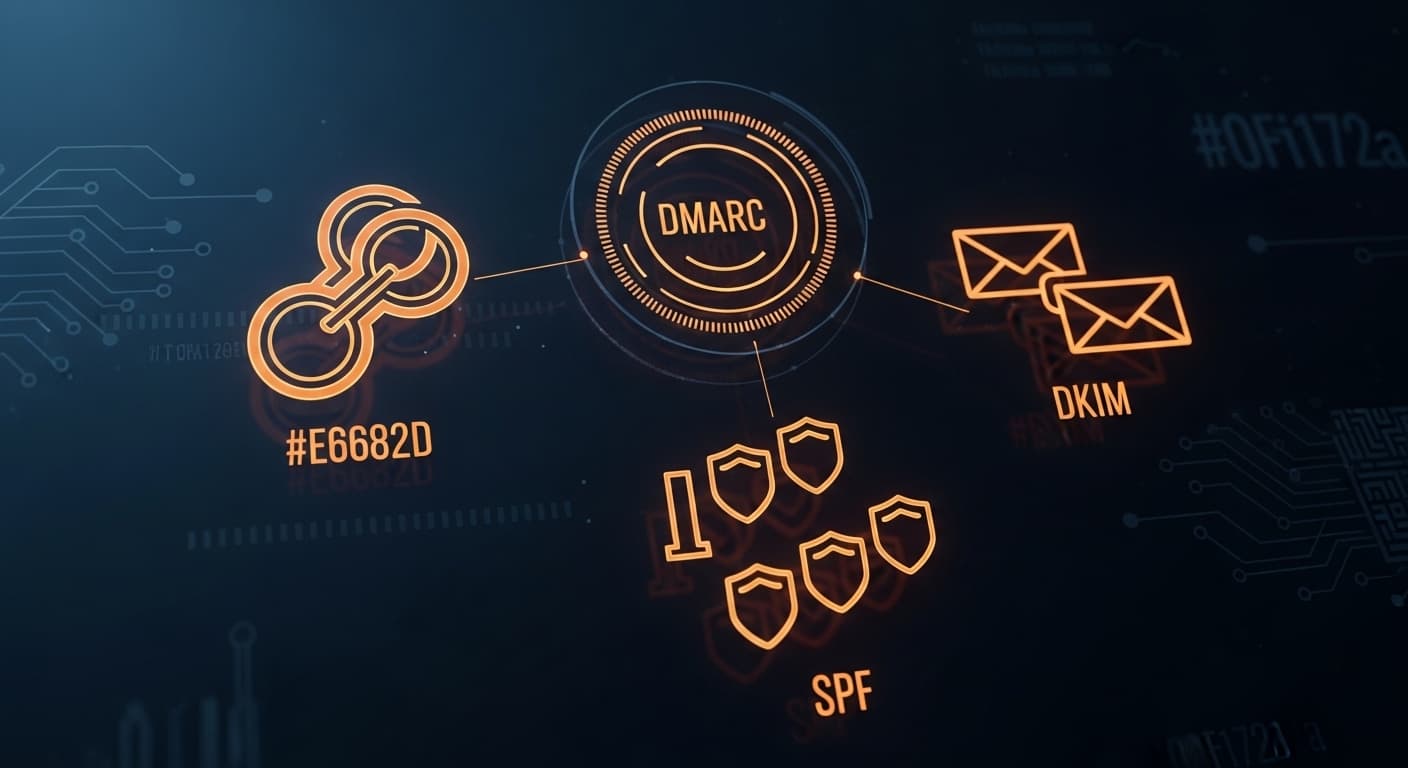
You must ensure your domain is configured to prevent attackers from sending emails that look like they originate from your company. This is achieved through three key DNS records:
- SPF (Sender Policy Framework): Lists the IP addresses authorised to send email on your behalf. If an email comes from an unlisted IP, it’s flagged as suspicious.
- DKIM (DomainKeys Identified Mail): Adds a digital signature to your emails, proving they haven't been tampered with in transit and truly originated from your domain.
- DMARC (Domain-based Message Authentication, Reporting, and Conformance): This protocol builds on SPF and DKIM. It tells receiving mail servers what to do if an email fails SPF or DKIM checks (e.g., quarantine, reject, or simply report). Configuring a "reject" policy is the gold standard here, as it actively prevents spoofed emails from reaching inboxes. Many organisations start with a "report" policy, which is useful for monitoring, but moving to "reject" is critical for protection.
Human Controls
Technology can stop 99% of automated attacks, but a well-crafted, manual spear-phishing email can still slip through. Your staff must be trained to act as the final, critical firewall.
The "Verify by Second Channel" Rule
Implement a strict internal policy: Any request for a change in payment details, a sensitive data transfer, or an urgent financial instruction must be verified via a second, out-of-band communication channel. If you receive an email from a supplier claiming their bank details have changed, do not reply to the email. Instead, call the contact person using a phone number you have on file (not the one provided in the suspicious email or signature). This simple 60-second process has saved countless businesses from six-figure losses. This rule should be applied uniformly, regardless of the sender's perceived authority.
Security Awareness Training
Regular, relevant, and engaging security awareness training is essential. These are not about catching employees out; they are about building "muscle memory" and fostering a culture of vigilance. When employees are regularly exposed to the tactics attackers use—such as creating fake urgency, mimicking the CEO’s tone, or subtle grammatical errors—they become naturally suspicious of unusual requests. Simulated phishing exercises, conducted regularly, are a highly effective way to reinforce this training and identify areas for improvement.
Internal Procedures and Dual Authorisation
For significant financial transactions or changes to critical vendor information, implement a dual authorisation process. This means that two separate individuals must approve the change or payment, ideally with one of them conducting the "verify by second channel" check. This adds another layer of defence, making it harder for a single point of failure to lead to a successful BEC attack.
Framework Alignment: Cyber Essentials
The UK government-backed Cyber Essentials scheme is the best framework for SMEs to measure and improve their security posture. It is not just a badge; it is a structured approach to addressing the most common cyber threats, including BEC. Achieving Cyber Essentials certification requires you to:
- Use firewalls to secure your internet connection.
- Secure your devices and software.
- Control who has access to your data and services.
- Protect yourself from viruses and other malware.
- Keep your devices and software up to date.
By aligning your business with these standards, you demonstrate to your clients and partners that you take data security seriously—a major competitive advantage. Furthermore, the controls mandated by Cyber Essentials, particularly around secure configuration, access control, and malware protection, directly reduce the vectors an attacker might use to gain initial access for a BEC attack. Cyber Essentials Plus provides an additional layer of verification through an external audit, offering even greater assurance.
Common mistakes we see
Even with good intentions, businesses often make fundamental errors that leave them exposed to BEC:
- Reliance on basic email security: Assuming standard Microsoft 365 or Google Workspace security is sufficient without configuring advanced threat protection features.
- Weak or absent MFA: Not enforcing MFA across all accounts, or using less secure methods like SMS that can be circumvented.
- No DMARC 'reject' policy: Many organisations configure DMARC for reporting but fail to move to a 'reject' policy, allowing spoofed emails to still reach inboxes.
- Inconsistent verification: Having a "verify by second channel" policy but not consistently enforcing it, especially for "urgent" requests from senior staff.
- Infrequent or generic training: Treating security awareness as an annual tick-box exercise rather than ongoing, relevant education.
Key Takeaways
To protect your business from the growing threat of Business Email Compromise, focus on these critical areas:
- Mandate MFA: Ensure Multi-Factor Authentication (preferably number matching or hardware keys) is enabled on all email accounts and administrative portals.
- Lock Down Your Domain: Implement SPF, DKIM, and a DMARC 'reject' policy to prevent domain spoofing.
- Establish Verification Protocols: Never change bank details or process urgent, unusual payments based on an email request alone. Always verify via a secondary, trusted channel.
- Invest in Human Firewalls: Conduct regular, engaging security awareness training and simulated phishing exercises to help your team spot social engineering tactics.
- Pursue Cyber Essentials: Use the Cyber Essentials framework to audit your security maturity and provide a clear roadmap for improvement.
The threat of BEC is persistent, but it is not inevitable. By combining robust technical controls with a culture of vigilance, you can shield your SME from becoming a statistic. Managed IT support providers play a crucial role here, offering the expertise to configure these complex security layers and the monitoring capabilities to catch threats before they manifest as financial loss. After all, the cost of prevention is typically a fraction of the cost of recovery, and far less stressful.
To take the next step