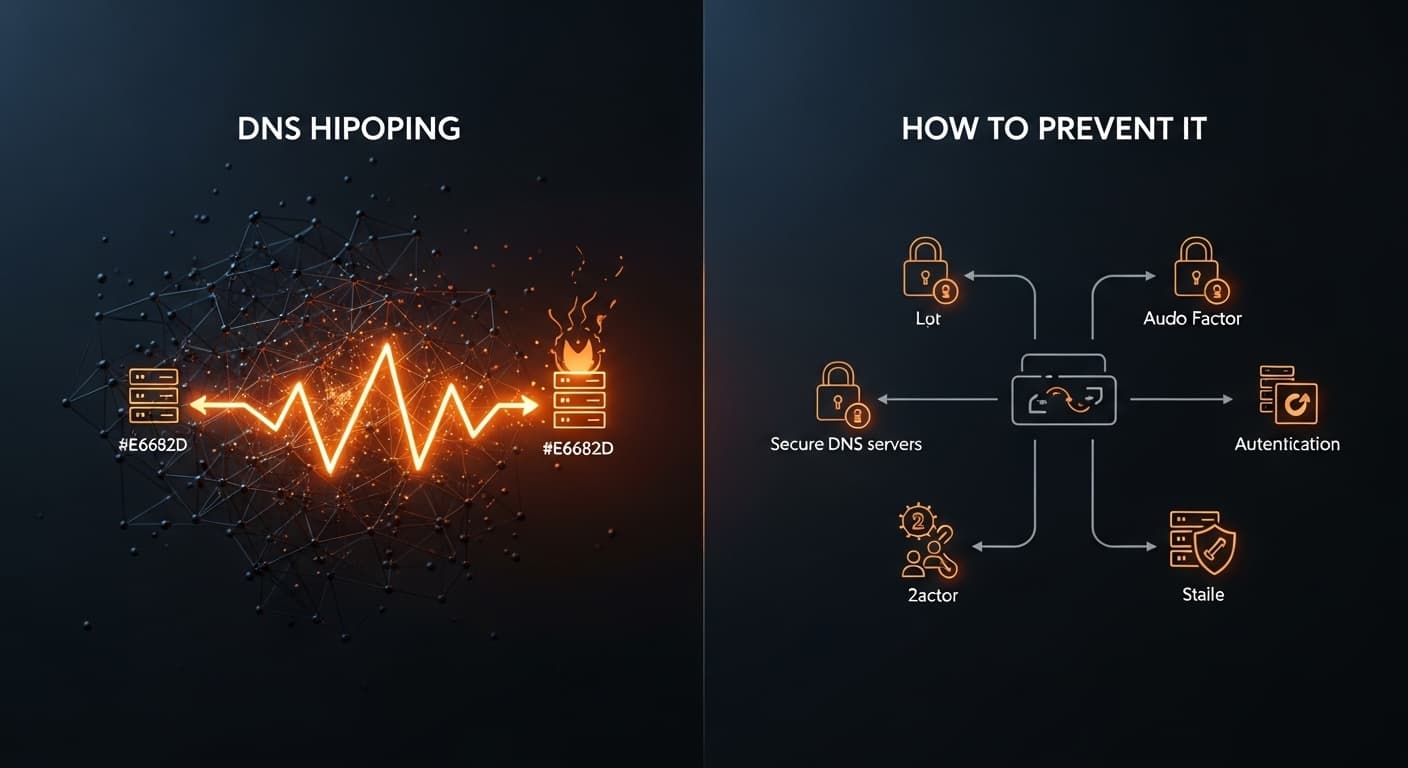

Your website and email domains are the front door to your business online. For UK SMEs, ensuring the integrity of these digital assets is not merely about operational efficiency; it is a critical security imperative. Among the various threats circulating internet traffic, DNS hijacking—also known as DNS redirection—stands out as a sophisticated and particularly damaging attack vector. When cybercriminals compromise your Domain Name System (DNS), they effectively seize control of where your digital traffic is directed. This can lead your customers to fraudulent websites, intercept private business communications, or disrupt your operations entirely. Understanding this mechanism, and crucially, how to prevent it, forms a cornerstone of any effective cyber security posture.
What DNS hijacking actually means
To understand DNS hijacking, one must first grasp the fundamental role of the Domain Name System (DNS). Think of DNS as the internet's directory service. When you type a website address like www.yourbusiness.co.uk into a browser, the DNS translates that human-readable name into an IP address. This string of numbers is what computers use to locate each other on the internet.
DNS hijacking occurs when an attacker corrupts this translation process. Instead of your browser being directed to your genuine server, the compromised DNS settings redirect the user to a malicious server controlled by the attacker. This can happen in a few key ways.
The two primary methods of attack are:
- Local Hijacking (Malware): This occurs when an attacker installs malware on a specific user's device, such as a laptop or office PC. This malicious software alters the local DNS settings on that machine. Consequently, when the user attempts to access a banking portal or a business application, they are surreptitiously sent to a fake site designed to look identical to the legitimate one.
- Network/Router Hijacking: This method poses a greater threat to SMEs. If an attacker gains unauthorised access to your office router or your Domain Registrar account, they can modify the DNS settings for the entire network. This means every device connected to your office network—from the managing director's smartphone to the accounting department's desktop—is automatically redirected to malicious sites without individual compromise.
Why it matters for UK SMEs
For a UK-based SME, the repercussions of a DNS hijacking incident extend far beyond a mere technical inconvenience. It represents a deliberate act of fraud and a serious breach of security. The implications can be significant.
Firstly, there is the issue of financial loss and direct fraud. Attackers frequently create convincing "phishing" replicas of legitimate payment portals or internal systems. If customers or employees are unknowingly redirected to these fake sites and enter payment details or sensitive credentials, money can be stolen, and accounts compromised. Beyond direct financial theft, there are the costs associated with incident response, forensic investigations, and the inevitable loss of business due to damaged reputation.
Secondly, data breaches and GDPR non-compliance are a major concern. If your DNS is hijacked, attackers can intercept traffic intended for your internal cloud services, shared drives, or customer portals. This can lead to the exfiltration of sensitive client data, intellectual property, or employee information. Under the UK General Data Protection Regulation (GDPR), failing to implement appropriate technical and organisational measures to protect personal data can result in substantial fines from the Information Commissioner's Office (ICO). Furthermore, a data breach often necessitates mandatory reporting to the ICO and affected individuals, incurring further reputational damage and administrative burden. The National Cyber Security Centre (NCSC) regularly highlights the importance of proactive defence for SMEs to mitigate such risks.
Finally, business interruption can be profound. DNS hijacking can render your email systems unusable, redirect your website traffic away from its intended destination, or block access to critical cloud-based business applications. This effectively locks you out of your own digital operations, halting sales, customer service, and internal communications until the correct DNS settings are restored. The downtime can be prolonged, costly, and difficult to recover from, particularly for smaller organisations with limited contingency plans.
How to prevent DNS hijacking: A practical walkthrough
Preventing DNS hijacking requires a multi-layered approach, addressing security at the domain registration level, within your internal network, and through organisational practices.
Secure your Domain Registrar Account
Your domain name is a critical digital asset. If your Domain Registrar account is compromised, an attacker gains comprehensive control over your online identity. Protecting this account is your primary line of defence.
- Enable Multi-Factor Authentication (MFA): This is non-negotiable. Ensure that your registrar account requires MFA, ideally using a time-based one-time password (TOTP) app or a hardware security key. Even if a password is stolen, an attacker cannot log in without this second factor. On a recent client tenant audit for a 30-user engineering firm in Birmingham, we discovered their primary domain registrar account, holding five critical domains, had no MFA enabled whatsoever. This is not uncommon, frankly, but it presents an unnecessary and easily preventable vulnerability.
- Implement Registry Locking: For top-level domains, particularly .uk domains, many registrars offer a "Registry Lock" service. This premium feature prevents any changes to your DNS settings or domain ownership details without a manual, multi-step verification process, often involving phone calls or physical identity checks. It adds a crucial layer of protection against unauthorised modifications.
- Limit Administrative Access: Only the absolute minimum number of people within your organisation should possess administrative access to your domain management portal. Access should be granted strictly on a 'need-to-know' basis. Crucially, when a staff member leaves the business, their access must be revoked immediately as a standard component of your offboarding procedure.
- Use Strong, Unique Passwords: Ensure the password for your registrar account is complex, lengthy, and not reused anywhere else. A password manager can assist with this.
- Regularly Review Domain Settings: Periodically check your domain's DNS records, contact information, and administrative contacts. Discrepancies could indicate a subtle compromise.
Strengthen your Internal Network Security
Once your domain is secured, attention must turn to your internal office network. Many DNS hijacking incidents originate from weak router configurations or unpatched devices.
- Change Default Router Credentials: Many SME routers are installed with factory-default usernames and passwords (e.g., admin/admin). These are prime targets for automated botnets and simple brute-force attacks. Change these immediately to long, complex passphrases. Frankly, relying on default router credentials is a bit like leaving your car keys in the ignition and hoping for the best.
- Implement DNS Filtering: Deploy enterprise-grade DNS filtering services, such as Cisco Umbrella or Cloudflare Gateway. These services act as an intelligent 'gatekeeper' for all outbound internet requests. They check the reputation of destination IP addresses and domains before allowing a connection. If a user attempts to visit a known malicious site—even if their local DNS has been compromised—the filtering service will block the request, providing an essential layer of defence.
- Regular Firmware Updates: Router manufacturers frequently release firmware updates that include critical security patches for newly discovered vulnerabilities. Establish a routine schedule to check for and apply these updates, ideally at least once a quarter. Neglecting this leaves known entry points open for attackers.
- Deploy Endpoint Protection: Ensure all devices on your network (laptops, desktops, servers) are protected by modern Endpoint Detection and Response (EDR) solutions. These tools can detect and block malware that attempts local DNS hijacking or network configuration changes.
Adopting Industry Standards: Cyber Essentials
In the UK, the government-backed Cyber Essentials scheme is an accessible and effective framework for SMEs aiming to protect themselves against the most common internet-borne cyber attacks. DNS hijacking is directly addressed within its five key controls.
- Boundary Firewalls and Internet Gateways: The scheme mandates the proper configuration of firewalls to prevent unauthorised access to your network. A correctly configured firewall can block malicious inbound connections that might attempt to compromise your router's DNS settings.
- Secure Configuration: By adhering to the Cyber Essentials checklist, you ensure that your devices and software are configured securely, disabling unnecessary services and removing default passwords that attackers could exploit to install DNS-altering malware.
- Patch Management: The scheme requires that all software and hardware on your network are kept up to date with the latest security patches. This closes the vulnerabilities that attackers often use to gain a foothold on machines, which can then be used to initiate local DNS hijacking.
- Access Control: Cyber Essentials emphasises controlling who has access to your systems and data, directly supporting the principle of limiting administrative access to critical systems like your domain registrar.
- Malware Protection: The requirement for robust anti-malware solutions helps detect and remove threats that could lead to local DNS hijacking on individual workstations.
Achieving Cyber Essentials certification not only strengthens your defences against DNS hijacking but also demonstrates to your clients and partners that you take data security seriously. This is a significant competitive advantage and increasingly a prerequisite for doing business in the UK marketplace.
Common mistakes we see
Based on our work with UK SMEs, several recurring errors contribute to DNS hijacking vulnerabilities:
- Neglecting MFA on Registrar Accounts: Despite its simplicity, many organisations still leave their domain registrar accounts protected by only a password, creating a single point of failure.
- Using Default or Weak Router Credentials: Leaving routers with factory default usernames and passwords, or using easily guessable ones, provides an open invitation for network compromise.
- Failing to Apply Firmware Updates: Postponing or ignoring security updates for network hardware leaves known vulnerabilities unpatched, which attackers actively scan for.
- Lack of Regular Domain Setting Reviews: Assuming that once a domain is set up, it requires no further attention can lead to missed indicators of compromise or outdated contact information.
- Insufficient Employee Awareness Training: Employees unfamiliar with phishing tactics are more likely to fall for malware-laden emails that could lead to local DNS hijacking on their devices.
Key Takeaways
- DNS is the internet's directory: If compromised, you lose control of where your digital traffic is directed.
- MFA is paramount: Always protect your Domain Registrar account with Multi-Factor Authentication.
- Registry Locking offers vital protection: For high-value domains, consider locking the domain at the registry level to prevent unauthorised changes.
- DNS Filtering adds intelligent defence: Utilise third-party security services to proactively block malicious DNS requests before they reach your users.
- Compliance enhances security: Aligning with the UK Cyber Essentials framework systematically reduces the risk of DNS hijacking and other common cyber threats.
- Employee vigilance is essential: Ensure your team can recognise phishing attempts, as local malware can bypass network-level defences.
DNS hijacking is a silent but potent threat. However, it is not an insurmountable one. By combining robust technical safeguards like MFA and DNS filtering with a proactive culture of security and adherence to established frameworks, your business can significantly reduce its susceptibility to these attacks. In an era where digital trust is everything, taking these steps is not just an IT task; it is a fundamental commitment to the longevity and integrity of your business.
When to call in help
Recognising the complexities of modern cyber security, particularly for SMEs with limited internal IT resources, is crucial. Implementing and maintaining these safeguards effectively requires specialised knowledge and consistent effort. If you lack dedicated IT staff, or if the prospect of auditing your entire digital estate feels overwhelming, seeking external expertise is a pragmatic decision. A specialist provider can conduct thorough assessments, deploy appropriate technologies, and establish ongoing monitoring, ensuring your defences remain robust without diverting your focus from core business operations.
To take the next step